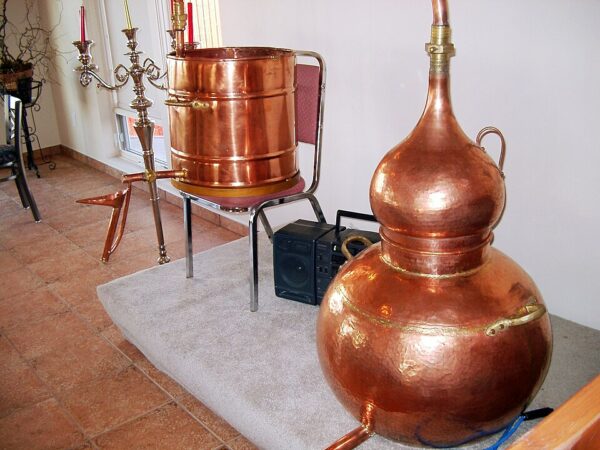

The Supreme Court agreed Monday to hear a challenge to a 158-year-old federal law that makes it a crime for Americans to distill spirits in their own homes, setting up a constitutional showdown over the limits of congressional power.
The prohibition, enacted in 1868 as part of a broader effort to prevent tax evasion among commercial distillers, carries penalties of up to five years in prison and a $10,000 fine. Challengers argue that Congress has no constitutional authority to prohibit Americans from producing spirits at home for personal use, while the Justice Department maintains that the restriction is necessary to enforce federal excise taxes.
The justices will review a ruling from the Fifth U.S. Circuit Court of Appeals that sided with members of the Texas-based Hobby Distillers Association. The court concluded that the federal government’s prohibition on home distilling exceeded Congress’s constitutional authority to levy taxes.
The decision conflicted with a ruling issued just 11 days earlier by the Sixth U.S. Circuit Court of Appeals, which upheld the ban in a case brought by John Ream, an Ohio brewpub owner who wants to distill whisky at home for personal consumption.
The Justice Department urged the Supreme Court to take up the Fifth Circuit case to resolve the disagreement between the two appeals courts. Robert Alt, an attorney representing the challengers, said his clients are “thrilled” that the justices agreed to hear the dispute.
“Our country’s founders would be rolling over in their graves to learn that a pastime in which even George Washington partook, which is as American as apple pie and certainly a lot older, has quite absurdly been turned into a federal crime,” Alt said in a statement.
Attorneys challenging the law argue that allowing Congress to prohibit otherwise lawful activities simply because they could complicate tax collection would dramatically expand federal authority. They warned that the same reasoning could be used to justify restrictions on activities ranging from cooking and gardening to working from home.
“The importance of this case and the questions it presents could hardly be overstated,” the plaintiffs’ lawyers wrote. “It presents fundamental questions of the extent of federal power and the powers reserved to the states and the people.”
The Justice Department argues that Congress has regulated and taxed distilled spirits since the nation’s founding and that the home-distilling restrictions emerged after decades of efforts to combat tax evasion. Government attorneys maintain that upholding the law would not give Congress unlimited authority over unrelated private activities.
The administration also asked the Supreme Court not to consider a separate argument raised by Ream concerning Congress’s authority to regulate interstate commerce. Government lawyers contend that the question was not properly presented in the litigation. The case will require the justices to determine whether Congress can use its constitutional taxing authority to prohibit an activity outright, even when the spirits are intended for private consumption rather than commercial sale.
[READ MORE: Disgraced Democrat Used Campaign Cash To Pay Wife]