
A Pakistani crewman aboard the Honour 25 saw Somali pirates firing AK-47s at the tanker’s bulkhead. He ran from the engine room, pounding on cabin doors and shouting, “Lock the doors!”
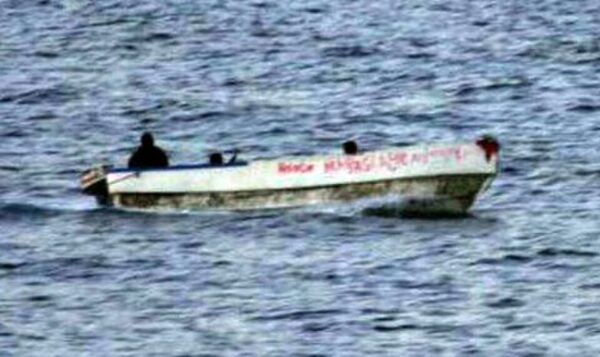
The pirates had arrived in two small boats while the tanker crossed the Gulf of Aden. They seized the ship, shut down its engine and ordered the crew to sit silently as gunmen fired into the air. The crew warned that a spark could ignite the 2,700 tons of diesel aboard. “It has 2,700 tons of diesel,” Khan told CNN. “If you fire a gun, it can make a spark, and it will explode the ship.”
More boats brought additional gunmen until about three dozen pirates were aboard. They took positions around the vessel and ordered it toward Durdura, a coastal fishing village, where it anchored about two nautical miles offshore.
The pirates demanded $7 million. Crew members had been told the tanker belonged to a Somali named Osman Shire Quud, but that name was absent from its documents. They eventually located the management company, Wharf Chartering, which did not respond to requests for comment. After several calls, the company negotiated the ransom down to $1 million, according to engineer Yousuf.
The crew initially could call relatives in Pakistan for five minutes each week. The calls became less frequent, then stopped entirely in July. Families protested outside government offices in Karachi, Melbourne and London as the company repeatedly promised a rescue. “So we were just waiting,” said Mahwish, Khan’s wife. “And we kept waiting for five and a half months.”
Piracy in Somalia surged after the central government collapsed in the early 1990s. Pirates attacked about 1,000 ships and collected more than $400 million in ransom between 2005 and 2012, according to Matthew Reisener, senior national security adviser at the Center for Maritime Strategy. Authorities recorded 237 incidents in 2011.
Multinational patrols led by NATO, the European Union and a U.S.-led task force sharply reduced attacks. Only two successful hijackings were reported from 2013 to 2023. The resurgence began in late 2023, as drought, conflict and rising costs strained Somalia’s economy. The war in Iran has also redirected naval assets toward the Persian Gulf and Bab al-Mandeb Strait, thinning counter-piracy patrols.
“Need, not just opportunity, is driving the spike in piracy,” Reisener said.
The EU Naval Force’s Operation ATALANTA has reported its highest number of boardings, armed robberies, hijackings and related incidents in 15 years. At one point this summer, six vessels and about 90 crew members were under pirate control, according to the operation. “Where there is instability, the bad boys and the pirates – they use it,” Vice Adm. Ignacio Villanueva, the operation’s commander, told CNN.
Oil tankers have become especially attractive targets as prices have exceeded $100 a barrel in recent months. Houthi activity off Yemen has pushed some commercial traffic closer to Somalia. “It’s more lucrative to attack now,” said Walker. “For one activity, pirates can get a very large payout – even a couple million dollars.”
The Honour 25 pirates arrived emaciated, then consumed the crew’s food, clothing and bedding. Provisions ran out after about a month. “They took everything to eat from the provision store,” Yousuf said. “Everything our cook used to cook for us.” Khan described the pirates as “Very thin, very tall. They are nothing. You could only slap him, and he would fall down. But he had a gun, so he was strong.”
The pirates arranged deliveries of rice, daal, tomatoes, potatoes, sugar and oil, and occasionally brought goats or lambs to slaughter, according to AP. They also consumed large amounts of khat, a stimulant leaf widely grown in Somalia. “They ate khat all the time. Somebody asked how much it cost. He said one bundle was $60,” Yousuf said. “Somebody invested in these pirates.”
In mid-September, the crew was told a ransom deal had been reached. “They said the negotiation was finished and the deal was final. The $1 million would be coming, and they were happy,” Yousuf said. “They also wanted to go.” The ship was moved to Garacad, and the crew was allowed to shave and cut their hair after being told the owner’s negotiator had requested a fitness test. “We were very happy,” Khan said.
The crew did not know an alternative plan was underway. Puntland authorities oppose ransom payments and have intensified counter-piracy operations. On Sept. 25, the region’s maritime police freed the crew of the Sibu 1, an oil tanker seized off Yemen on Aug. 20. Police killed one pirate, wounded five and detained 41; the mostly Indian crew was released.
Soon afterward, the Honour 25 crew received a warning. “Their pirates told our pirates this ship is coming to you also,” Khan recalled. “Be aware.” The pirates returned to Durdura on Sept. 28.
At 2 a.m., the pirates spotted a light and an approaching vessel. They arranged the hostages on deck as a human shield, holding guns to their heads for two hours before deciding the alert was false. At 7 a.m., another vessel appeared: the Puntland police.
A dozen crew members, including Khan, were stripped of their shirts, bound to a railing and held on a catwalk. Yousuf was ordered to start the engine, then returned to the deck. Gunfire erupted and continued for about half an hour as rounds passed over the hostages.
An Indonesian crewman, Fiki, used the crane to lower lifeboats for pirates trying to flee. A pirate called Arab shot Fiki in the feet, then approached the bound crew and fired his AK-47. “He put on the burst,” Khan said. “He was just shooting like crazy.”
The gunman killed second officer Kashif Umer. A stray round hit another pirate in the jaw, prompting him to fire back. The exchange lasted about 10 minutes while the crew remained bound in the line of fire. Khan was hit in the thigh, others were wounded by bullet fragments, and four more crew members were killed. “I saw too much blood on the ship,” Khan said. “I never saw such a kind of bloodbath.”
As the captain lowered lifeboats, Yousuf radioed the police vessel: “Please stop the firing. They’ve already killed five persons. If you don’t stop, they’ll kill all of us.” The shooting stopped, and the pirates fled in the lifeboats.
The damaged tanker could not reach shore under its own power. Police towed it to a nearby port, where the injured crew received treatment. The next day, the survivors carried their dead ashore.
[READ MORE: Undercover Video Shows Dem Plan To Prosecute Enemies]