
Havana’s contacts with Washington are on hold, Russia’s ambassador to Cuba said Tuesday. Víctor Koronelli said Cuban officials remain willing to discuss migration and humanitarian aid, but have ruled out talks on changes to the island’s political system.
“I wouldn’t say that the negotiations in Havana with Washington have failed. In reality, according to our Cuban partners, there is no comprehensive dialogue with the United States, but rather sporadic contacts that are currently suspended,” Koronelli said in an interview with the Russian news agency TASS. The Cuban state outlet Cubadebate later carried his remarks.
Cuban Deputy Foreign Minister Carlos Fernández de Cossío said in July that Havana had agreed to open a channel proposed by Washington. Senior State Department and CIA officials visited the island and met with their Cuban counterparts, but the meetings produced no agreement, according to Koronelli. He attributed the impasse to the conditions Washington placed on further talks.
Four days before the ambassador’s interview, Cuban President Miguel Díaz-Canel had offered to talk with Washington on terms of his own. “Without pressure, without conditioning, and without questioning our political system, our sovereignty, and our self-determination.”
Koronelli said Havana would discuss humanitarian assistance, including aid delivered through Catholic organizations. “The demands of the U.S. authorities for changes to the political system and the internal organizational structure of the country are absolutely unacceptable to the Cuban leadership; they will never agree to discuss these issues,” he said.
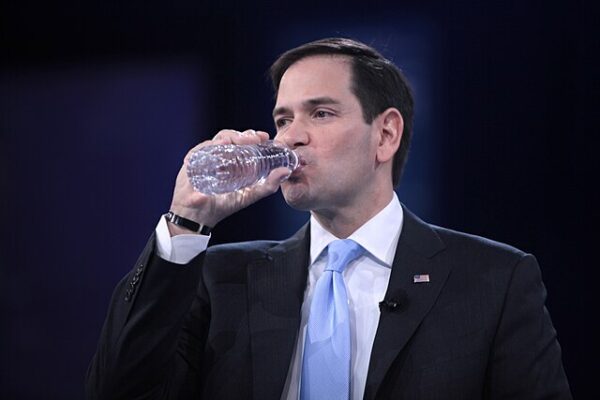
President Donald Trump said November 12 that he would consider a brief military campaign against Cuba and wanted to “end Cuba” before leaving office. Earlier that month in Paris, Secretary of State Marco Rubio said the Cuban government “is afraid to grant its people any kind of freedom” and that its leaders would have to “wake up and understand that there is no future on the path they are following.”
In July, Rubio’s State Department released a 64-page report on Cuban influence in the United States accusing Havana of spending decades recruiting American activists and using propaganda and espionage to advance its interests abroad.
Havana has also seen support slip at the United Nations. On October 28, 130 countries voted for a resolution condemning the U.S. embargo, down from 165 in 2025 and 187 in 2024. Koronelli attributed the decline to “an unprecedented campaign” by Washington to persuade other governments to withhold their backing.
The prospect of U.S. sanctions has complicated Cuba’s economic ties with Russia as well. Koronelli said he could give no assurance that Russian companies would invest in new projects on the island while they faced the risk of secondary sanctions. Asked about Cuba’s ability to endure, he recalled a saying from the economic crisis Cubans knew as the Special Period. “They will resist now, just as they did in the 1990s. Simply because ‘no one gives up here’.”
[READ MORE: DeSantis Gets Surprise Endorsement]