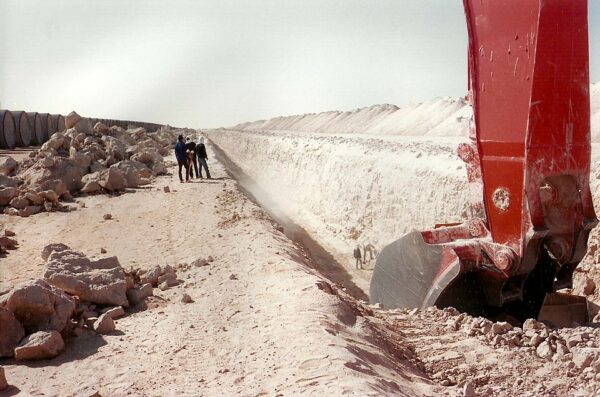

Algeria’s state-owned energy company has begun construction on its portion of a massive pipeline designed to carry Nigerian natural gas across the Sahara and into European markets, providing a potential new source of energy outside the Persian Gulf and Russia.
SONATRACH announced that work is underway on the Algerian section of the Trans-Saharan Gas Pipeline, a long-planned project involving Algeria, Nigeria and Niger. Once completed, the pipeline would connect Nigerian gas fields to Algeria’s extensive energy network and its export infrastructure on the Mediterranean coast.
The project is being developed in partnership with Nigeria’s National Petroleum Company and Niger’s SONIDEP.
The pipeline is expected to span approximately 4,128 kilometers, running north from Nigeria through Niger and Algeria. It is designed to transport between 20 billion and 30 billion cubic meters of natural gas each year.
The Algerian section will follow the corridor of the Trans-Saharan Road from the Niger border to the National Gas Dispatching Center at Hassi R’Mel, one of Algeria’s most important gas hubs. From there, the pipeline would connect with the country’s existing domestic transportation network and export facilities.
SONATRACH said the route was designed to take advantage of existing roads, pipelines and other infrastructure, reducing some of the logistical and technical difficulties associated with the project.
In a statement, the company described the pipeline as “a key driver for strengthening regional integration, the valorization of African energy resources, and promoting the continent’s sustainable economic development.”
Three African countries have begun construction of a gas pipeline to Europe that bypasses Russia – Business Insider.
Algeria, Niger, and Nigeria are carrying out the Trans-Saharan Gas Pipeline project, which, once completed, will be capable of supplying the EU with up to 30… pic.twitter.com/gkz3dg37ez
— Jürgen Nauditt 🇩🇪🇺🇦 (@jurgen_nauditt) June 6, 2026
The project could also carry growing strategic importance as governments look for ways to reduce their dependence on vulnerable maritime energy routes.
The Strait of Hormuz, the narrow waterway separating Iran and Oman, remains one of the world’s most critical energy chokepoints. Roughly one-fifth of global seaborne oil shipments pass through the strait, along with a significant share of liquefied natural gas exports from Qatar and other Gulf producers. Military conflict or other disruptions in the region can quickly affect prices and raise concerns about global supply.
The Trans-Saharan Gas Pipeline would offer Europe an additional overland route for African gas, bypassing maritime chokepoints and providing another potential alternative to Russian energy supplies.
No firm completion date has been announced for the entire pipeline. But the start of construction in Algeria marks a significant step forward for a project that has been discussed for decades.
[Read More: How America Changed It’s Protection Of Our Infrastructure]