


A new poll showing Democratic challenger Hallie Shoffner narrowly ahead of Republican Sen. Tom Cotton in Arkansas is the sort of result that will immediately draw national attention, if only because of how improbable it would be if it held through November. Cotton is a two-term Republican senator in a state Donald Trump carried overwhelmingly less than two years ago. A Democrat defeating him would not simply be an upset; it would suggest Republicans were facing a political collapse extending far beyond the handful of battleground states expected to decide control of Congress. For now, however, there are good reasons to treat the result as surprising rather than prophetic.
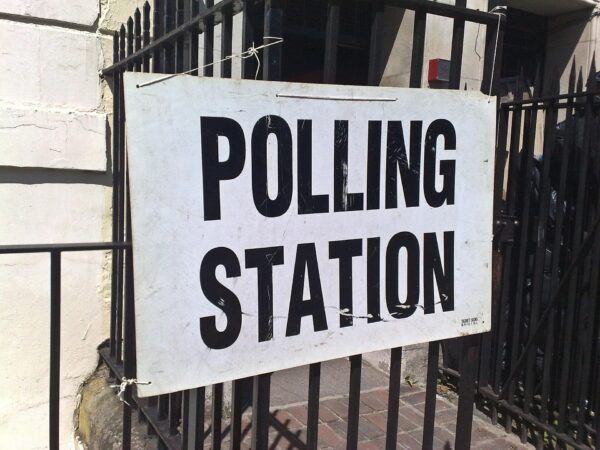
The Talk Business & Politics-Hendrix College Poll, released earlier in the week, found Shoffner at 47.4 percent support compared with Cotton’s 44 percent. Libertarian Jeff Wadlin registered about 3 percent, while 5.6 percent of respondents remained undecided. The survey of 1,217 likely voters was conducted Aug. 11-12 and carries a margin of error of 4.7 percentage points, placing Shoffner’s apparent advantage well within the statistical margin. “Today, this race is a competitive one, but I believe we have miles of messaging to go before attitudes solidify,” said Roby Brock, editor-in-chief of Talk Business & Politics. “I think this race is fluid and the amount of money likely to be poured into Arkansas to influence the outcome will be substantial.”
Even the appearance of a close race is remarkable in Arkansas, where Republicans have spent the past generation transforming what was once a Democratic stronghold into one of the reddest states in the country. Cotton first won the seat in 2014, defeating Democratic incumbent Mark Pryor by a wide margin, and Democrats did not field a Senate candidate against him six years later. Republicans now dominate the state’s congressional delegation and statewide offices. Cotton, in other words, is not the sort of incumbent Republicans expected to spend August defending.
The Hendrix poll suggests dissatisfaction with Trump may be contributing to Cotton’s weakness. Nearly half of respondents strongly disapproved of the president’s performance, and those voters backed Shoffner by overwhelming margins. Shoffner also posted near-universal support among Democrats and led independents 59 percent to 29 percent, while performing particularly well among women, younger voters, college graduates and voters in the fast-growing counties of northwest Arkansas. Cotton maintained 82 percent support among Republicans and performed better among older voters, men, rural voters and those without college degrees. He led voters 65 and older by 22 points and remained competitive among voters between 45 and 64, two groups that tend to turn out heavily in midterm elections.
There were other encouraging signs for Cotton. He received support from roughly one in four Black voters, a strong showing for a Republican, and Republican strategist Robert Coon noted that Shoffner’s effort to attack Cotton on agricultural issues had not yet produced an obvious breakthrough in the county-level data. Democratic analyst Jay Barth of Hendrix College argued that Cotton’s relatively weak personal connection with voters leaves him more exposed in a difficult national environment, but Cotton still enters the final months of the campaign with the advantages of incumbency, a formidable fundraising operation and the likelihood of substantial national Republican support if the race truly becomes competitive. Roughly $3 million has already been spent attacking Shoffner, according to analysts reviewing the poll, with considerably more money likely to follow.
That makes the poll worth watching without treating it as a preview of November. Republicans have seen enough unusual polling this cycle to know the danger of overreacting to a single survey, while Democrats have their own recent reason for caution. Polls surrounding several contests involving candidates backed by the Democratic Socialists of America badly misjudged the eventual results, sometimes making races appear far less competitive than they ultimately proved to be. Those misses were a useful reminder that accurately identifying a midterm electorate — particularly in primaries and unusually fluid races — remains difficult even late in a campaign.
If Shoffner were actually to defeat Cotton, the implications would be enormous. Arkansas is not a state Republicans can plausibly afford to lose in an ordinary political environment, and a Democratic victory there would suggest that the GOP’s problems extended deep into territory it has taken for granted for years. But that is precisely why one poll showing Cotton down three points should be approached carefully. The result is striking enough to command attention, not strong enough to justify panic. Republicans should watch Arkansas closely. They should also remember how many confident polling narratives have already failed to survive contact with actual voters.
[READ MORE: Newsom Unsure About Being A Good President]





A leftist Poll against a Republican incumbent?….Oh my let’s give up.