
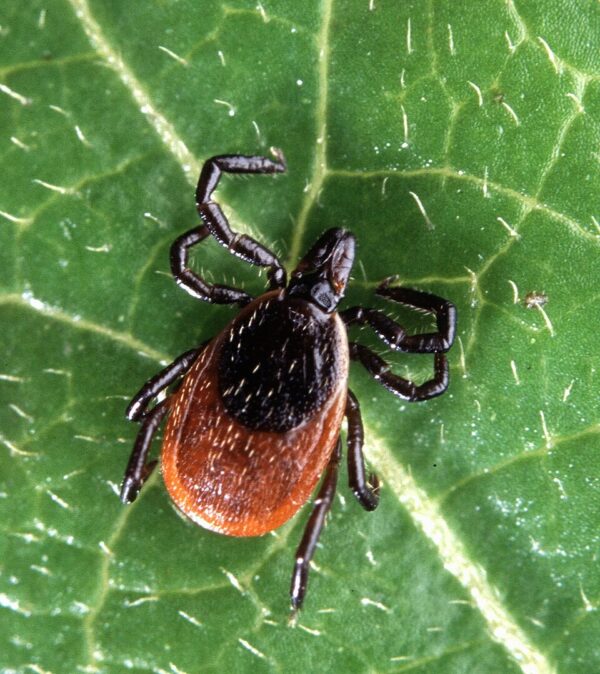

Emergency room visits for tick bites have climbed to their highest levels in nearly a decade as populations of the aggressive lone star tick expand across parts of the United States, particularly the Northeast, bringing new attention to a once-obscure condition that can leave people allergic to red meat.
Alpha-gal syndrome, first identified in the mid- to late 2000s, is an allergic reaction to a sugar molecule found in most mammalian meat. The condition can develop after a tick — most commonly a lone star tick — bites a person and exposes the immune system to the alpha-gal molecule. The body can then produce antibodies that trigger an allergic reaction after eating beef, pork, lamb, venison and other mammalian products.
Unlike many food allergies, the reaction is often delayed. Symptoms typically emerge three to six hours after eating and can include hives, swelling, gastrointestinal distress and, in severe cases, anaphylaxis. Some patients also become sensitive to dairy products or report reactions to the smell of cooking meat, while animal-derived ingredients in products such as gelatin capsules can also cause problems.
Doctors and residents on Martha’s Vineyard and in parts of the Hamptons have described the spread as an epidemic, with some families reporting multiple cases following repeated exposure to ticks.
Experts point in part to booming white-tailed deer populations, which provide an important breeding ground for ticks. A single deer can host as many as 1,500 ticks during a season, while a female tick can lay roughly 2,000 eggs.
“The white-tailed deer are the primary breeding ground for lone star ticks as well as deer ticks,” said Aubrey Stimola Ryan, who treats tick-bite patients at Martha’s Vineyard Hospital. “We have a very large, out-of-control deer population here.”
Sam Telford, a professor of infectious disease and global health at Tufts University, said alpha-gal syndrome has been familiar in parts of the South and Midwest for years, even as its recent spread into affluent Northeastern communities has drawn greater national attention.
“It’s very interesting that it has risen to national prominence because of places like the Hamptons and Martha’s Vineyard,” Telford told CBS News. “Southerners are like, ‘Well, if you don’t have a dog with ticks on it, what kind of dog is that?’”
The condition is changing daily life in some heavily affected communities. Residents have begun avoiding woods, fields and even backyard grass, while some restaurants now advertise “Alpha-gal friendly” menus. Families have also limited children’s outdoor time because of concerns about additional tick bites.
For some patients, symptoms appear to lessen over time if they avoid being bitten again, and doctors may eventually supervise the gradual reintroduction of small amounts of meat.
Public-health entomologists recommend wearing permethrin-treated clothing, tucking pants into socks, using EPA-registered insect repellents and conducting thorough body checks after spending time outdoors. They also recommend placing outdoor clothing in a dryer on high heat for at least 10 minutes after returning inside and paying particular attention to waistbands, the groin and areas beneath clothing when checking for ticks.
Some communities are also considering longer-term efforts to reduce deer populations, which researchers say could help lower the number of ticks in heavily affected areas.
[READ MORE: Bessent Promises Financial ‘D-Day’ For Iran]