
Iran launched a volley of ballistic missiles toward Israel late Tuesday, minutes after President Donald Trump announced a two-week pause in planned U.S. strikes against Tehran, underscoring the volatility of a conflict that has repeatedly outpaced diplomatic efforts.
Air raid sirens sounded across Israel shortly after Trump’s announcement, which he issued on Truth Social just before an 8 p.m. deadline he had set for Iran to comply with demands to reopen the Strait of Hormuz or face intensified attacks on its infrastructure. The pause, according to Trump, was tied to a 10-point proposal from Iran that could serve as a framework for negotiations.
On the ground, however, events unfolded rapidly. Fox News correspondent Mike Tobin, reporting live from Tel Aviv, described the near-immediate response from Iran. “Jesse, as soon as we got the ceasefire, we got a bunch of missile fire,” Tobin told Jesse Watters. “It wasn’t five minutes from the Truth Social post to the point where the phones started alerting that missiles had launched from Iran. The first of the missiles was intercepted, and the shrapnel landed outside of Jerusalem, not causing any problems.”
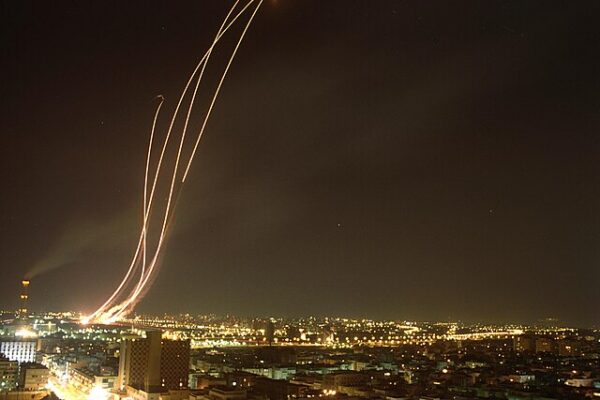
Tobin said the scene over Tel Aviv reflected both the scale and complexity of the attack. “What we saw here in Tel Aviv were these cluster bombs, like you see on your screen right now. They break up and look a bit like a 4th of July firework and usually has one bright point that comes streaking down to earth, but the bomblets themselves, they shine bright when they first break up, then they get dark as they cool off, and then they explode when they hit the ground, and it looks like I’m getting an alert for one more missile.”
Israeli officials, while expressing reservations about Iran’s proposal, indicated they would adhere to the pause out of deference to Washington’s decision. “They’re not particularly pleased with the proposals from the Iranians in this 10-point proposal, but they say they will abide by the ceasefire,” Tobin reported, citing Israeli sources.
The exchange came against the backdrop of intensifying military activity, explained The Daily Caller. Israeli forces had struck Iran’s largest petrochemical facility at the South Pars natural gas field in Asaluyeh a day earlier, targeting infrastructure that Israeli Defense Minister Israel Katz said accounts for roughly half of Iran’s petrochemical production. The strike was framed as both a military and economic blow, aimed at constraining Iran’s export capacity.
The broader confrontation has unfolded since the launch of Operation Epic Fury in late February, a joint U.S.-Israeli campaign directed at Iran’s nuclear and ballistic missile programs following the collapse of earlier negotiations. Trump has repeatedly warned that failure to comply with U.S. demands—particularly regarding the Strait of Hormuz—could trigger expanded attacks on Iranian power plants and transportation infrastructure.
The newly announced two-week pause is intended to create space for renewed diplomacy. Both sides have signaled, at least formally, a willingness to suspend major operations during that period. Yet the near-immediate missile barrage following the announcement highlights the fragility of the arrangement and raises questions about command, control, and intent on the Iranian side.
Israeli officials have said they will respect the pause while continuing to monitor developments closely, emphasizing that key security objectives remain unresolved. Meanwhile, reports of additional attacks across the Gulf region in the hours after Trump’s announcement suggest that the conflict’s geographic scope remains fluid.
[Read More: