
Tehran privately signaled to regional intermediaries that it intends to escalate pressure on the United Arab Emirates, according to a new report, as the US-Israeli war on Iran continues to reorder Gulf alliances and deepen long-standing rivalries.
Iranian officials informed both Saudi Arabia and Oman of plans to heavily target the UAE, an outreach that appears designed to exploit existing tensions between Abu Dhabi and Riyadh rather than consolidate regional opposition. Those tensions have persisted for years and have sharpened during the current conflict. The UAE’s formal exit from OPEC, effective May 1, has further underscored the divergence, reflecting how the war is widening fractures within the Gulf rather than closing ranks.
In direct discussions with Saudi counterparts, Iranian representatives reportedly said they planned to “crush the Emiratis,” invoking the geopolitical rift between the two Gulf powers. Saudi officials, while engaged in dialogue, reportedly objected to the severity of the language.
Despite sustained hostility, diplomatic channels between Riyadh and Tehran remain open. Iranian Foreign Minister Abbas Araghchi met with Saudi Foreign Minister Faisal bin Farhan last month, suggesting both sides continue to hedge against further escalation even as the broader conflict intensifies.
Iran’s strategy appears aimed at widening divisions among US-aligned Gulf monarchies. Saudi Arabia and the UAE, while often aligned in opposition to Iran, have pursued competing regional agendas, clashing in proxy theaters such as Yemen and Sudan, as well as in efforts to influence Libyan commander Khalifa Haftar.
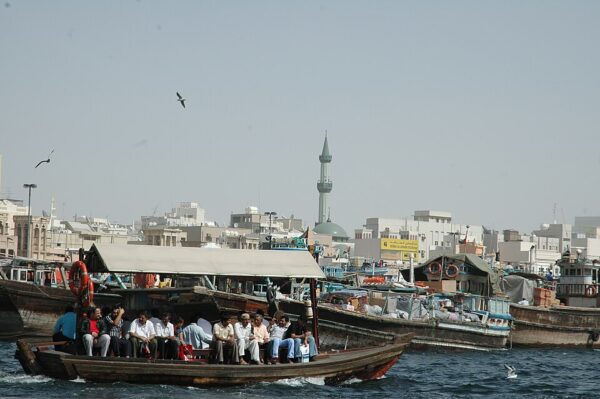
The Gulf states have largely opposed the US-Israeli campaign against Iran but have borne the brunt of its regional spillover. The UAE has absorbed the most significant retaliation. Iran has launched thousands of ballistic missiles and drones toward Emirati territory, with some accounts reporting more than 2,800 interceptions. The sustained barrage has caused damage in both Dubai and Abu Dhabi, exposing vulnerabilities in critical infrastructure.
The economic consequences are beginning to surface. Emirati officials have quietly explored closer financial coordination with Washington as a hedge against prolonged disruption. Central Bank Governor Khaled Mohamed Balama and other officials held preliminary discussions in Washington regarding potential currency swap lines or emergency access to US dollars, measures intended to stabilize the financial system if oil revenues or export flows are constrained by instability in the Strait of Hormuz.
The UAE’s dirham remains pegged to the US dollar and is backed by substantial foreign reserves. Still, analysts caution that extended damage to energy infrastructure or shipping lanes could strain liquidity conditions. Officials have described the discussions with US counterparts as precautionary, and no formal request for support has been submitted. Some Emirati representatives have reportedly raised the possibility that sustained dollar shortages could accelerate a shift toward alternative currencies, including the Chinese yuan, in oil transactions.
At the same time, Abu Dhabi has signaled a willingness to align more closely with Washington’s economic posture by considering a freeze on Iranian assets. Such a move would further complicate the UAE’s role as a regional financial hub while reinforcing its strategic alignment with the United States.
The UAE’s decision to exit OPEC reflects broader strain within the cartel as geopolitical pressures mount. As the group’s third-largest producer, the UAE now has greater latitude to adjust output independently, and officials have indicated they will increase production gradually in line with market demand.
Energy markets are already responding to the disruption. Reduced Persian Gulf supply has pushed oil prices sharply higher, with West Texas Intermediate crude surpassing $100 per barrel and Brent approaching $113. Analysts have revised forecasts upward, warning that prices could reach between $130 and $150 per barrel if current disruptions persist, a trajectory that is contributing to rising gasoline prices in the United States.
The conflict has also reinforced security cooperation between the UAE and Israel. Israel has provided advanced defense systems, including laser-based technologies, and speculation continues regarding potential Emirati involvement in operations targeting Iran.
Despite mounting economic costs, including damage to infrastructure, disruptions to Dubai’s tourism sector, and the temporary closure of major landmarks such as the Burj Al Arab, the UAE has remained among the most forward-leaning Gulf states in advocating continued pressure on Tehran. Its foreign minister reportedly told US Secretary of State Marco Rubio that the country is prepared for the conflict to extend for as long as nine months.
[Read More: California Democrats Can’t Stop It]