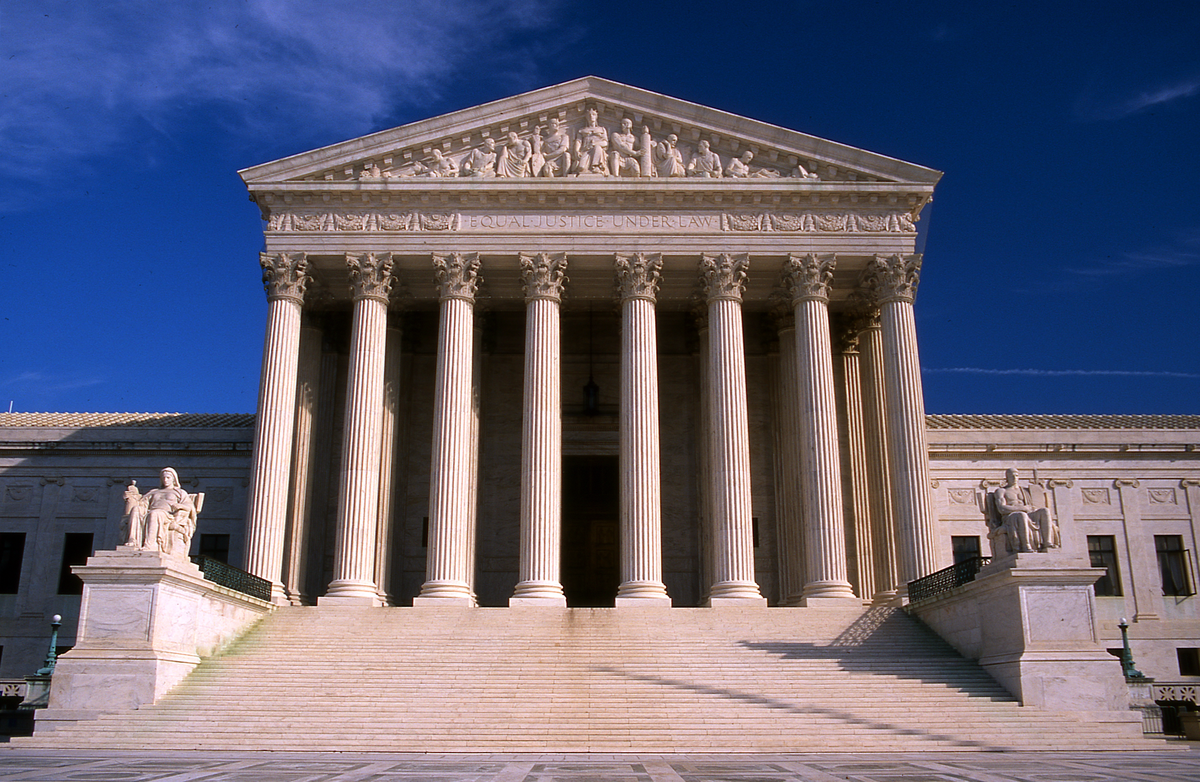

The Supreme Court on Monday night moved to immediately finalize its decision striking down Louisiana’s congressional map, clearing the way for state officials to redraw district lines ahead of the 2026 elections and setting off a sharp exchange among the justices over timing, neutrality, and judicial conduct.
In a brief unsigned order, the Court waived its standard 32-day waiting period, which typically allows losing parties time to seek rehearing. The majority pointed to the absence of any indication that the Black voters who had defended the now-invalidated map intended to request reconsideration, concluding that delay was unwarranted given the compressed election calendar.
The underlying 6–3 decision, issued April 29, invalidated the legislature’s 2024 map on the grounds that it relied impermissibly on race. That map had created two majority-Black districts after earlier litigation found a prior version with only one such district likely violated Section 2 of the Voting Rights Act. A revised plan is expected to restore a single majority-Black district, a change that could shift the state’s congressional delegation, currently split 4–2 in favor of Republicans.
The Court’s decision to accelerate finality drew a forceful dissent from Justice Ketanji Brown Jackson, who, as always, put her partisan politics ahead of the law, arguing that Louisiana should use unconstitutional districts segregated by race. Brown Jackson was the only justice to dissent in the ruling to allow Louisiana to draw constitutional maps.
Justice Samuel Alito, joined by Justices Clarence Thomas and Neil Gorsuch, responded in a sharply worded concurrence that framed the dissent’s argument as both unfounded and internally inconsistent. He rejected the claim that adhering to the standard 32-day period would somehow preserve neutrality, writing that such reasoning was “baseless and insulting.” In his view, allowing the clock to run out would risk producing precisely the kind of partisan distortion the dissent claimed to avoid by effectively forcing elections to proceed under a map already held unconstitutional.
Alito emphasized the practical urgency facing the Court. Early voting deadlines have already passed, and the general election is six months away. The state, he noted, cannot proceed under a map invalidated by the judiciary while awaiting a hypothetical rehearing request that no party has signaled it will file.
The first Alito footnote is notable: he says the original case was conferenced 7 months ago. That says there’s more than a little smoke to the rumors the liberal justices drug their feel to impact the midterms, and now Jackson is throwing a fit the majority is fixing that delay https://t.co/HIa4creaiD
— Daniel Vaughan (@dvaughanCI) May 5, 2026
A footnote in Alito’s concurrence added a pointed observation about the case’s timeline, noting that the constitutional question had been argued and conferenced nearly seven months earlier. In effect, Ketanji Brown Jackson and her liberal allies withheld their dissent for months in order to make the claim that the ruling was too late to impact the current midterms, a move that would help the Democrats win the House via segregated congressional districts.
Alito also rejected the dissent’s broader charge that the Court had engaged in an “unprincipled use of power,” calling the accusation “groundless and utterly irresponsible.” He questioned what principle, exactly, had been violated, arguing that neither strict adherence to internal timing rules nor avoidance of speculative criticism justified allowing an unconstitutional map to govern an impending election.
At the state level, the ruling has accelerated an already volatile redistricting process. Louisiana officials have delayed the May 16 primary, citing the legal uncertainty surrounding the map. Republican Gov. Jeff Landry said proceeding under the invalidated plan would amount to “electing members to Congress under an unconstitutional map.”
The legislature is expected to consider a new proposal in the coming days, while separate legal challenges to the primary postponement move forward in both state and federal courts.
[Read More: Another Church Put To The Torch]