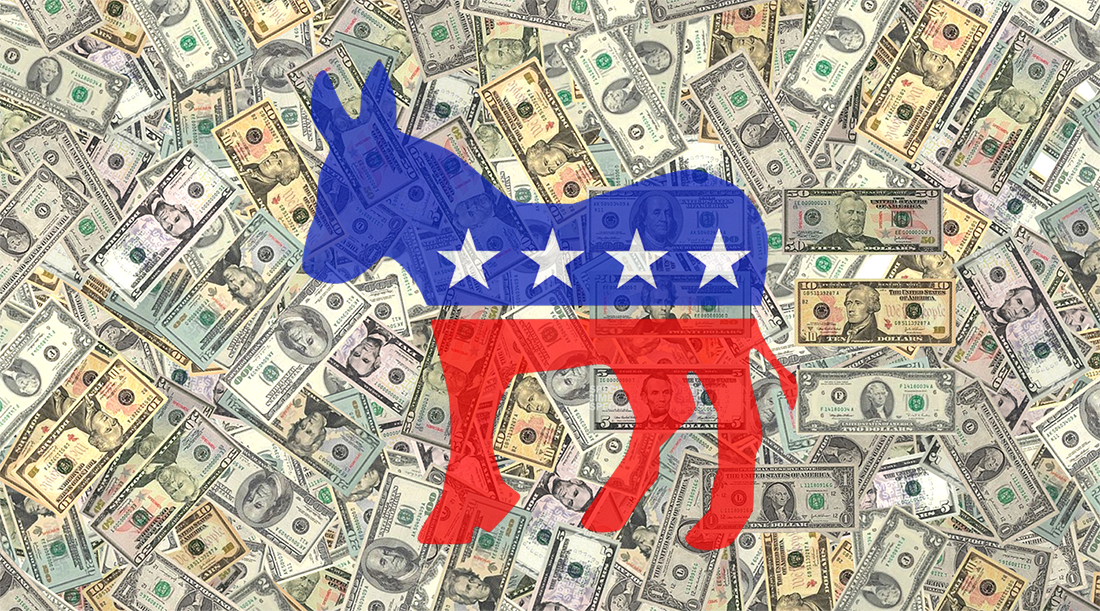

Democrats are approaching the 2026 midterm elections with a substantial financial disadvantage that could limit the party’s ability to compete for control of Congress.
Federal Election Commission filings covering activity through June 30 show the Democratic National Committee with $16.3 million in cash on hand and $18.5 million in debt. The Republican National Committee reported $128.5 million in cash and no debt.
The imbalance represents a sharp reversal from the 2024 presidential campaign, when Kamala Harris and allied Democratic committees raised more than $1 billion. The spending did not produce a victory, however, and the campaign ended the election cycle in debt after Donald Trump returned to the White House.
Several major Democratic donors have since withheld or reduced their support for the national committee. Reid Hoffman, the LinkedIn co-founder who regularly contributed to the DNC during previous election cycles, has not given to the committee during the current midterm campaign.
The pullback reflects broader dissatisfaction with the party following its 2024 defeat. Donors have raised concerns about party leadership, fundraising strategy and the absence of a clear political message capable of rebuilding the coalition that elected Joe Biden in 2020.
Republicans have also pointed to changes within the progressive nonprofit infrastructure that has supported Democratic-aligned advocacy, voter outreach and ballot campaigns.
Arabella Advisors, which provided administrative services to a network of powerful liberal nonprofit funds, ceased operations in November 2025 after the Gates Foundation ended its relationship with the firm. Sunflower Services subsequently acquired Arabella’s fiscal-sponsorship business and continued providing services to several of the same funds.
The transition followed years of scrutiny surrounding the use of nonprofit organizations that can finance political advocacy without publicly identifying all their donors. NCP previously reported on the Arabella network’s role in Democratic politics and on federal grants awarded through the State Department and USAID to progressive organizations associated with the Tides network.
No public evidence establishes that changes involving Arabella, Tides or USAID caused the DNC’s current financial problems. They have nevertheless contributed to Republican arguments that parts of the Democratic political infrastructure became dependent on large donors, nonprofit networks and federal spending streams that are now facing greater scrutiny.
The party’s ideological divisions may present a more immediate problem. Democratic Socialists of America-backed candidates have defeated establishment Democrats in several prominent primaries, including contests in New York, while progressive candidates have gained influence in other states.
The trend has unsettled some traditional Democratic donors and moderates who fear the party is moving further from the political center. Liberal comedian Bill Maher recently warned that socialist and communist activists were “colonizing” the Democratic Party.
Money alone will not determine the midterms, and the president’s party traditionally loses congressional seats during his first midterm election. Democrats may also benefit from strong fundraising by individual candidates and outside groups even as the national committee struggles.
Still, the DNC’s debt and limited reserves could restrict spending on advertising, voter turnout operations and state-party infrastructure. Unless Democrats close the gap, Republicans will enter the final months of the campaign with a substantial organizational and financial advantage.
[READ MORE: Newsom Has A Growing Radicalism Problem]