
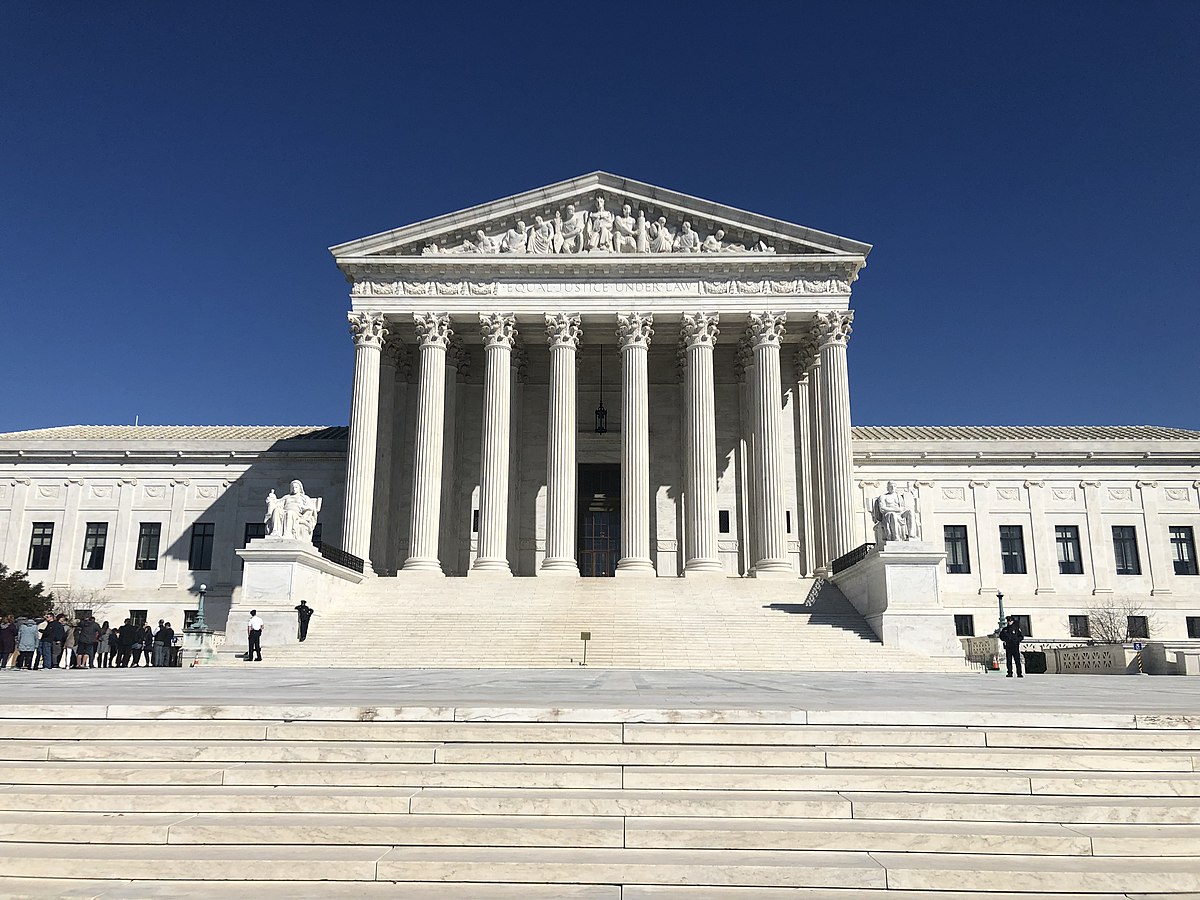

Senate Democrats have reintroduced legislation that would give each president two Supreme Court appointments per four-year term, eventually allowing the Court to grow to as many as 18 justices, a move that The National Review has noted is almost certainly unconstitutional.
Sen. Sheldon Whitehouse, D-R.I., introduced the Supreme Court Biennial Appointments and Term Limits Act with Sens. Cory Booker, D-N.J., and Alex Padilla, D-Calif.
The bill would require presidents to nominate a justice during the first and third years of each term, even when no vacancy exists. Only the nine most recently appointed justices would hear most cases, while more senior members would retain their offices, salaries and limited judicial and administrative duties.
The legislation would take effect at the beginning of the next presidential term. Under the current composition of the Court, its structure would eventually remove Justices Clarence Thomas and Samuel Alito and Chief Justice John Roberts from most appellate cases while leaving them formally in office.
Whitehouse described the proposal as a response to “an organized, dark-money funded scheme by right-wing special interests to capture and control the Court. . . . Right-wing billionaires, the fossil fuel industry, and other special interests have spent hundreds of millions to capture the Supreme Court by dictating who gets appointed to the Court and building a flotilla of front groups to influence how those appointees rule.”
Supporters argue that the measure would regularize appointments, reduce the political importance of unexpected vacancies and leave life tenure technically intact.
They have cited the Supreme Court’s 1934 decision in Booth v. United States, which held that a retired federal judge who continued to perform judicial work still held office.
“Congress may lighten judicial duties, though it is without power to abolish the office or to diminish the compensation appertaining to it,” the Court said.
Critics argue that Booth involved voluntary retirement, not a law forcing sitting justices into a reduced role. They contend that the proposal would create two classes of Supreme Court justices holding the same constitutional office but exercising substantially different powers.
Article III vests federal judicial power in “one supreme Court” and provides that judges “shall hold their Offices during good Behaviour,” language traditionally understood to guarantee life tenure.
National Review senior writer Dan McLaughlin argued that the measure goes beyond changing the Court’s size, which Congress has done before, by stripping selected justices of authority over the Court’s central appellate docket.
Opponents also cite Alexander Hamilton’s defense of permanent judicial tenure in Federalist No. 78.
“That inflexible and uniform adherence to the rights of the Constitution, and of individuals, which we perceive to be indispensable in the courts of justice, can certainly not be expected from judges who hold their offices by a temporary commission,” Hamilton wrote.
The bill would also require the president to submit a nomination within 120 days of the beginning of the first and third years of a term, or after a previous nomination is withdrawn or rejected.
[READ MORE: American Consulate Attacked]